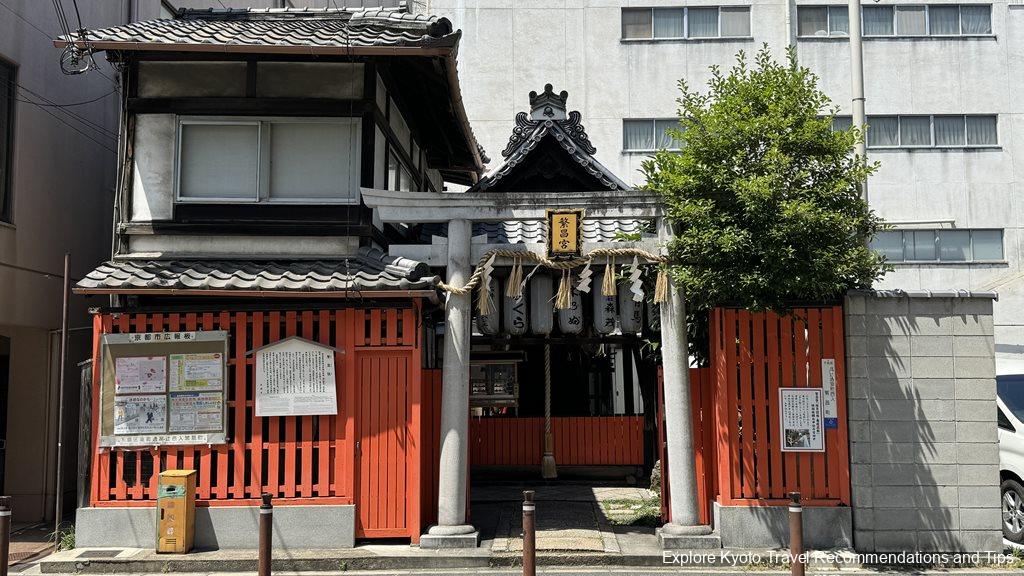
I would like to introduce Hanjo-jinja Shrine in Kyoto, which is said to be the only shrine in Japan dedicated to business prosperity, and Hannyozuka, an inner sanctuary located right next to Hanjo-jinja Shrine.
Hanjo-jinja Shrine is located 10-minute walk from Shijo-Karasuma, Kyoto’s downtown area.
Businessmen and business owners may have good luck if they visit Hanjo-jinja Shrine Shrine.
Origin of Hanjo-jinja Shrine
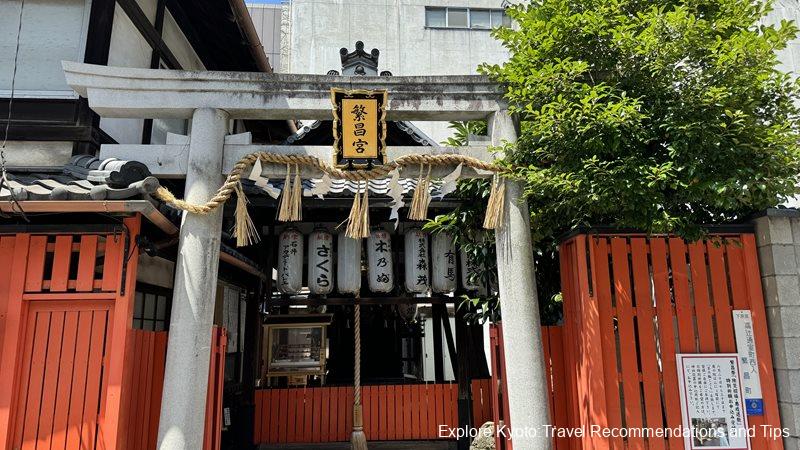
Hanjo-jinja Shrine in Shimogyo-ku, Kyoto is a small shrine located between Muromachi street and Shinmachi street, a little west of Karasuma Takatsuji where the head office of the Bank of Kyoto is located.
Muromachi and Shinmachi have long been prosperous kimono and kimono wholesale streets, and the area around Hanjo-jinja Shrine is close to Iwatoyama, Shirakutenyama, Funaboko, and other floats of the Gion Festival.
Although Hanjo-jinja Shrine is a very small shrine, its history is as old as the Heian period (794-1185), and there are references to it in the Uji Shui Monogatari (The Tales of Uji Shūi) and documents from the Onin War.
Deities of Hanjo-jinja Shrine
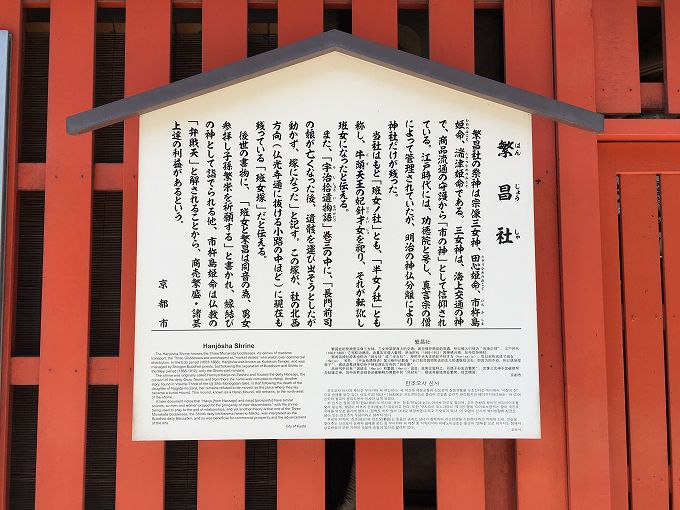
Hanjo-jinja Shrine enshrines the three Munakata Goddesses: Ichikishimahime-no-mikoto, Tagorihime-no-mikoto, and Tagitsuhime-no-mikoto.
Ichikishimahime-no-Mikoto is also understood to be “Benzaiten,” the god of wealth and prosperity, and this is what makes Hanjo-jinja Shrine so beneficial.
In the past, the shrine was called “Hannyo Jinja” or “Shrine of the Han-nyo,” then became “Hanjo-jinja Shrine” in Japanese.
It was also called Koutokuin during the Edo period and was administered by a Shingon sect temple, but only the shrine remained after the separation of Shinto and Buddhism in the Meiji period (1868-1912).

In the Edo period (1603-1867), the area around the shrine was renamed Hanjo-cho after the shrine, and even today the address of the area around Hanjo-jinja Shrine remains as Hanjo-cho, Shimogyo-ku.
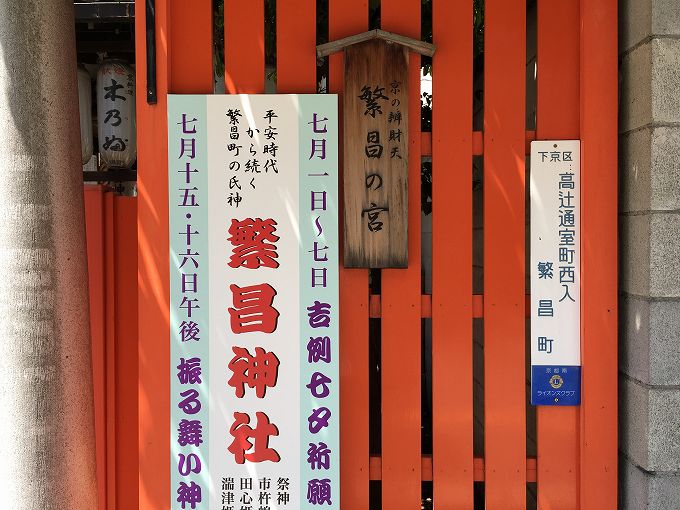
Every year in May, the annual festival “Shinkosai” is held at Hanjo-jinja Shrine. This annual festival was interrupted due to World War II, but was revived and the parade of the portable shrine resumed in 2013.
Incidentally, the meaning of both “商売繁昌 Shobai-Hanjo” and “商売繁盛 Shobai-Hanjo” are the same.
It was originally “繁昌 Hanjo” for business became “繁盛 Hanjo” for prosperity with the change to the current Kanji characters announced soon after the World War II, but the name “繁昌神社 Hanjo-jinja” remained unchanged.
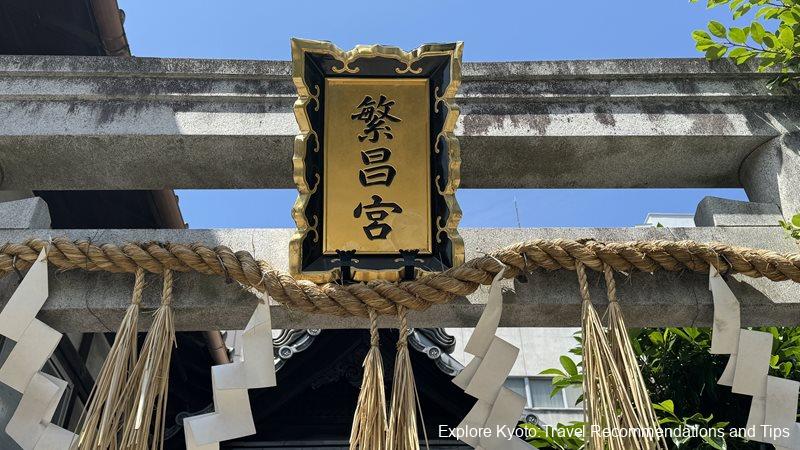
By the way, “天満天神繁昌亭 Tenma Tenjin Hanjotei,” a Kamigata rakugo theater in Osaka, is also “繁昌 Hanjo”.
Goshuin stamp and amulet of Hanjo-jinja Shrine
Goshuin stamp, Ema, and amulet can be picked up on the Precincts of the Shrine.
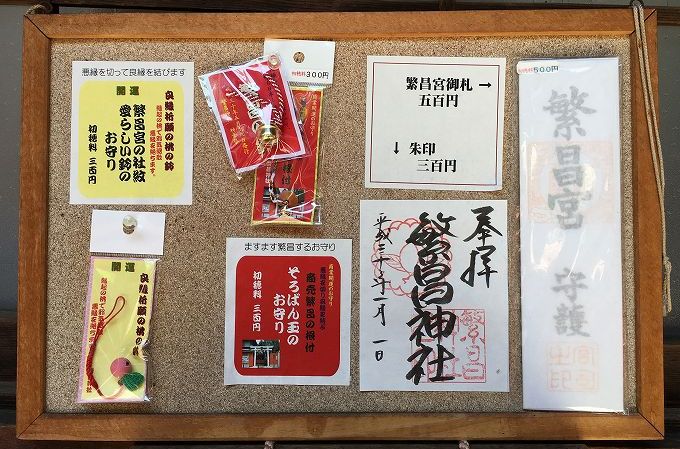
There are two types of Goshuin stamp, large and small, including one related to the Shinko Festival, an annual festival held in May at Hanjo-jinja Shrine.

In addition to business prosperity, Hanjo-jinja Shrine also offers blessings for the fulfillment of good marriages.
The “Netsuke for prosperous business” and “Peach bell for good marriage” amulets associated with both are available for a first-earning fee of 300 yen.

The netsuke for business prosperity has an abacus ball, and the Peach bell for good marriage has a peach bell.

It is understandable that an abacus ball is attached to a talisman for “prosperous business.”
I wondered what the relationship between prayers for a good marriage and peaches had to do with this… I looked it up and found that peaches have been beneficial for warding off bad luck for a long time.
There is also a peach for warding off bad luck at the Seimei Shrine of Yin-Yang Do in the same city of Kyoto.
You can see a peach on the sacred light of the Hanjo-jinja Shrine. A peach is also stamped on the Goshuin stamp.
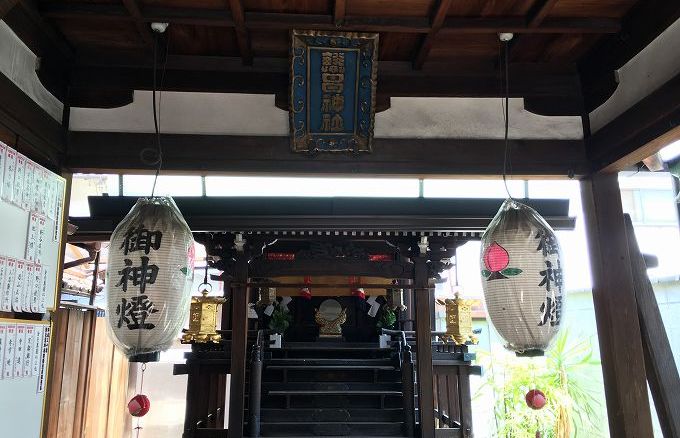
Hannyozuka, The inner shrine of Hanjo-jinja Shrine
Hannyozuka, which stands quietly at the end of an alley as the inner shrine Okuno-in of the Hanjo-jinja Shrine, is located at the end of an alley about 15 meters west of the shrine.

Hanjo-jinja Shrine was originally called “班女神社 Hannyo-jinja”, and it seems that Hanjo-jinja Shrine originated in this location. Come to think of it, Kibune Shrine in Kyoto also has an inner shrine Okuno-in.

Biography of Hannyozuka
A mysterious story about the daughter of Nagatono-Zenji, the Kamakura period (1185-1333) governor of Nagato, which is mentioned in the Uji Shui Monogatari (The Tales of Uji Shūi).
Nagatono-Zenji had two daughters, and lived here. The older sister had already married and the younger sister was unmarried, but there was a man who came by from time to time.
The sister fell ill at a young age and finally died, so her corpse was carried to the cemetery, but for some reason the coffin was empty.
When the people returned home, they found to their surprise that the corpse had returned. They took it to the cemetery again, but the corpse returned and finally stopped moving.
Eventually, the sister was buried here and a mound was built. After that, people moved away from around the mound out of fear, and a shrine was built on top of the remaining mound.
It is said that Hannyozuka is a place of legend, and that if a woman walked past the mound before marriage, her marriage would be annulled.
When Toyotomi Hideyoshi (historical samurai warlords) tried to move the shrine to Higashiyama-Sameushi, it was canceled because of the haunting.
There is a large tree beside the Hannyo mound, surrounded by Jizo statues and small shrines, creating a mysterious space that one would not expect to find in the city.

The biography states that “people left the area around Hannyo Mound,” giving it the image of a scary mound from which everyone has left.
However, there is also a history that the townspeople called this town “Ohannyo-cho” and have lived together with Hannyo mound.
The information on the mound reads, “The Hannyo Mound is still protected as the inner sanctuary of Hanjo-jinja Shrine by the parishioner of Hanjo-cho, recalling the lives and beliefs of the people of ancient times. Please keep this visit in your hearts for many years to come.”
Not only the Hanjo-jinja Shrine, but also Hannyozuka is a shrine that has been carefully protected by the local people.

Access to Hanjo jinja Shrine
To access Hanjo-jinja Shrine, the Kyoto Subway Shijo Station or Hankyu railway Karasuma Station is convenient.
From Shijo-Karasuma, it is about a 10-minute walk to get Hanjo jinja Shrine.
The nearest bus stop is Karasuma Matsubara. Access from Kyoto Station is more convenient by bus than by subway, as the bus stop is closer to Hanjo jinja Shrine. No parking is available, but coin-operated parking is available nearby.
Information on Hanjo-jinja Shrine
| Name | Hanjo-jinja Shrine |
|---|---|
| Address | 308 Hanjocho, Shimogyo Ward, Kyoto, 600-8433, Japan |
| Phone Number | +81-75-371-4615 |
| Deities | Ichikishimahime-no-mikoto, Tagorihime-no-mikoto, Tagitsuhime-no-mikoto. |
| Benefits | Prosperity in business, Good marriage |
| Admission Fee | Free (Open to the public) |
| Access | 10-minute walk from Shijo Station on Kyoto Subway 10-minute walk from Karasuma Station on Hankyu Railway 3-minute walk from Karasuma Matsubara Bus Stop served by Kyoto City Bus and Kyoto Bus |
If you are a businessman or manager visiting Kyoto, I recommend to visit Hanjo jinja Shrine, which is blessed with prosperity for business.
It is also recommend for single men and women. Please visit the shrine and receive the blessings of a good marriage.
Hanjo matsuri Festival, Mikoshi parade
At the annual Hanjo matsuri festival held every May at Hanjo jinja Shrine, a portable shrine carried by men makes a parade through the city of Kyoto.

The highlight of the festival is the street parade in Shijo-Karasuma and the visit to the shrine at the Otabisho. For more details, please see the following article.
Japanese Article : 商売繁盛の神社 繁昌神社と班女塚

Comments Please feel free to post your comments!